


Moth French Terry Shirt
Moth French Terry Shirt
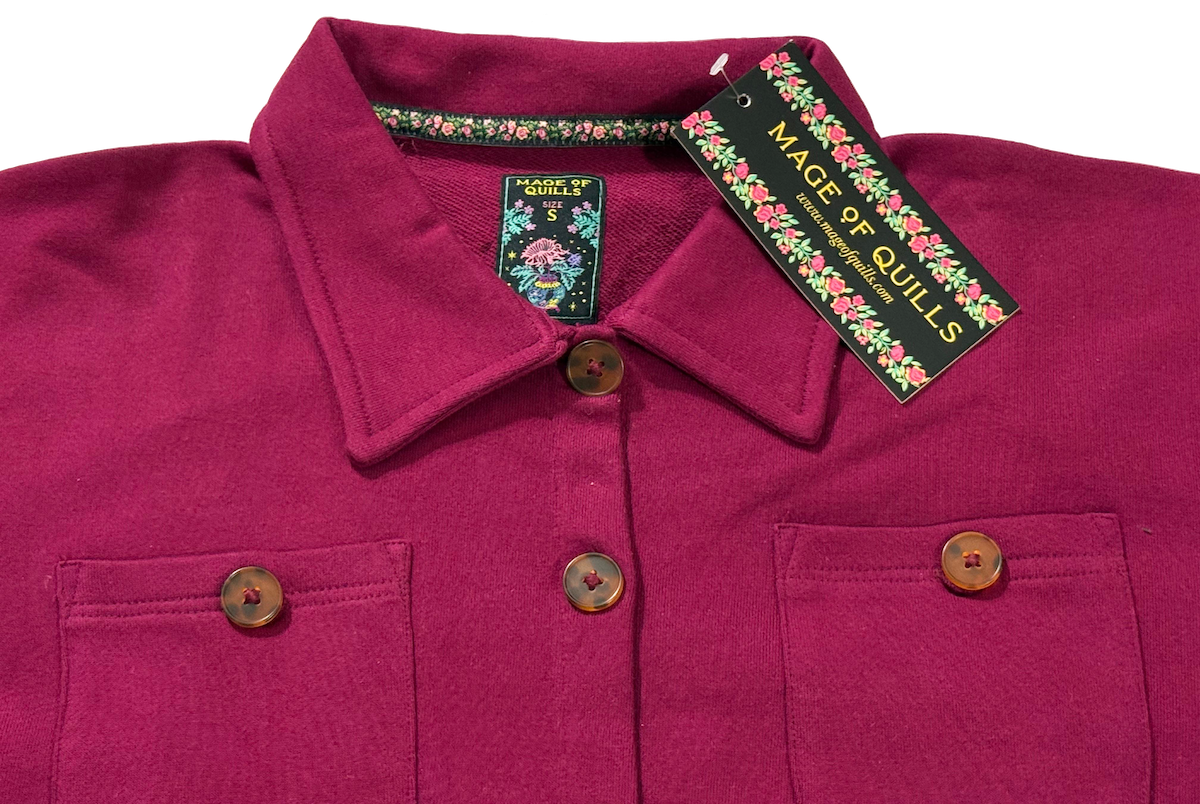
A cozy unisex french terry button shirt made with heavier weight French terry and screenprinted with a moon moth and marigolds. Metallic high density detail adds texture. Make a statement with the bold design while staying comfy.
- 100% cotton French terry
- slightly heavier 350 GSM/10.5 oz fabric
- screen printed design
- machine washable
Couldn't load pickup availability



High density screen print is a neat technique that adds tactile interest to screenprinted designs. Glitter mixed into the ink gives it extra sparkle. Flower and moth outlines are printed over an intricate design.
I'm always reaching for my french terry shirts as the weather gets cooler because they’re so convenient. I find I prefer the buttons to zippers on hoodies because the zipper is stiff and hangs a bit awkwardly when unzipped. The buttons make the garment drape more nicely.
The heavier weight french terry fabric will actually help keep you warm, but by itself isn’t too heavy for a pleasant spring or fall day, and you can unbutton it if the sun comes out.

You might be familiar with the luna moth of North America. Great news—the genus Actias is pretty big and has a variety of other gorgeously patterned moths as well! Most species in the genus are in Asia, with just a couple in the western hemisphere. The species I picked for the design is the Malaysian moon moth, though the close-up is a luna moth.

While researching this species, I found an answer to a question I didn’t know I had: why do these moths have long tails on their wings? Surely they would just get damaged and attract predators?
It turns out that these tails are an adaptation to divert attacks from bats, one of the main predators of these insects. In a 2014 study, scientists used high-speed infrared videography to show that the tails of luna moths serve as a lure to echolocating bats, which end up attacking the tails and not the moth itself. Because these moths only live as long as they need to to breed, it’s fine if the tails get damaged, as long as they serve their purpose.
The researchers also found that in various moths of this family (Saturniidae), the long wing tails independently evolved multiple times—it’s clearly an effective anti-predator strategy!
(Photos: Andy Reago & Chrissy McClarren/Wikimedia Commons, Yi-Kai Tea/Wikimedia Commons, Source: PNAS)