


Bee-Eater Crewneck
Bee-Eater Crewneck
A cozy unisex crewneck sweatshirt made with heavier weight French terry and embroidered with colorful Carmine Bee-Eaters on a screenprinted pattern. It’s perfect to jazz up an everyday look with a bright design while prioritizing comfort.
- 100% cotton French terry
- slightly heavier 350 GSM/10.5 oz fabric
- screen printed and embroidered design
- machine washable
Couldn't load pickup availability



I love combining textures, and embroidery on top of screenprint provides visual and tactile interest. The colorful birds are embroidered to make them stand out over the intricate vintage-inspired pattern.
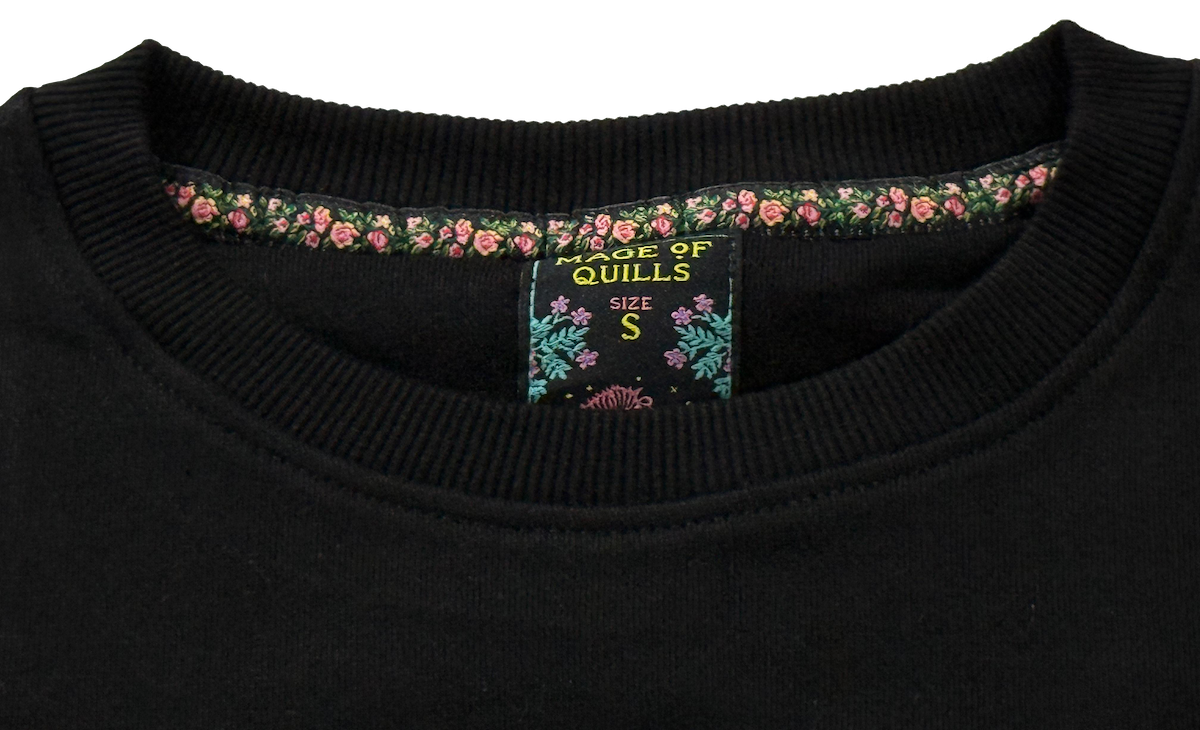
The cozy crewneck fit is unisex and can be sized up if you like your sweatshirts baggy. The heavier weight french terry fabric will actually help keep you warm, but by itself isn’t too heavy for a breezy spring or fall day. I try to source quality neck/waist/wrist ribs so they last as long as possible. This is a garment you’ll reach for again and again!

I keep a folder on my computer called “Weird Birds.” It’s not just goofy pictures—I also save pictures of birds with notable color palettes or some other design inspiration. The Southern Carmine Bee-Eater was one of these, and I am especially fond of the whole genus because I see them regularly in the city where my family’s clothing factory is located. This particular species is from the African continent.

When researching “fun facts” for this page, I wasn’t expecting to find quite so many. These little colorful guys have several notable behaviors:
- They hunt insects by riding on the backs of bigger birds and mammals, waiting for bugs to be flushed out by the movement of the larger animal, and even follow vehicles and machinery for the same reason.
- The Mandinka people of West Africa call them “Cousin to the fire” because they pursue insects flushed by fires.
- After catching a bee or wasp, they rub it against their perch to kill it and remove the stinger/venom.
- Their breeding colonies can have thousands of individuals, with their nests located in tunnels dug into soft river bank soil. These nesting cavities can have a density of 60 tunnels per square meter!
(Photos: I've Got It On Film!/Wikimedia Commons, Duncan McNab/Unsplash, Sources: San Diego Zoo Wildlife Alliance, SANBI, Coraciiformes TAG)